
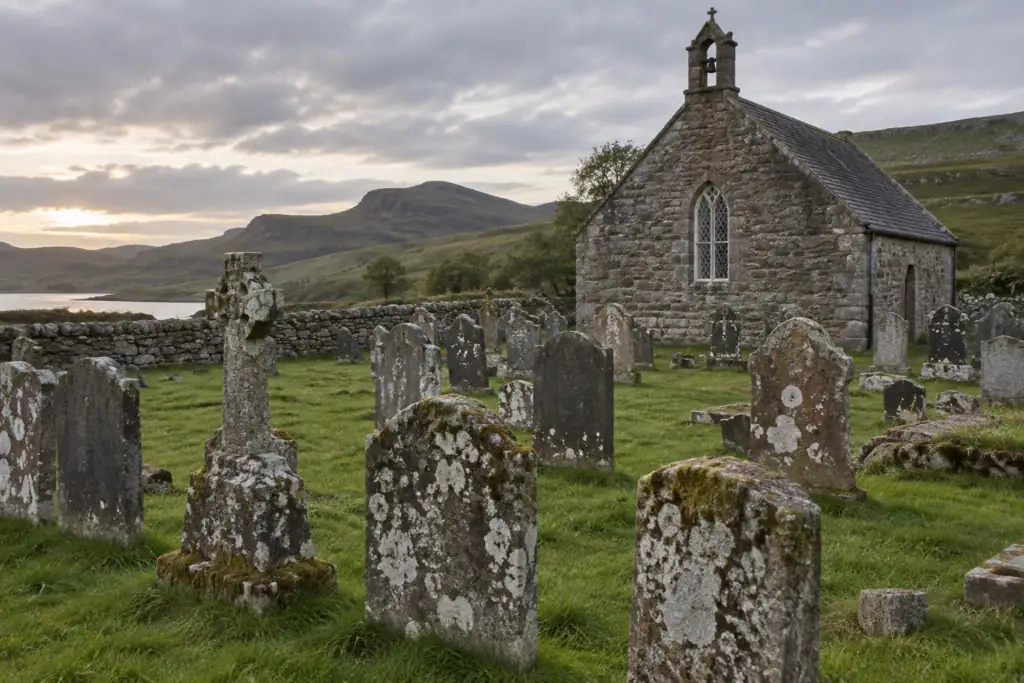
Most people who ask me about ancestry tours in Scotland arrive with a surname, a parish name they cannot pronounce, and a printout from a genealogy site. That is usually enough to work with, and it is not yet an itinerary. The parish might sit 180 miles from the graveyard, the records office keeps its own hours, and the farm in the story may now be a field with a gate.
I drive these trips myself, so the planning matters more than the sightseeing. Here is how I put one together.
Start with the records, not the route
Before I plot a single mile, I want to know what you actually have. A baptism entry with a parish name. A passenger list with a port. A census return with a street. One solid document beats a family legend every time.
Scottish civil registration began in 1855, and parish registers kept by the Church of Scotland run back further, in many places to the 1600s. Those older registers are patchy. If your line leaves the record in 1790, that gap is normal and not a sign you have made a mistake.
The main archive is ScotlandsPeople at General Register House on Princes Street in Edinburgh, a five minute walk from Waverley Station. Booking and opening arrangements change, so check the current position on their website before you fly. Local archives matter as much. The Highland Archive Centre in Inverness, the Orkney Library and Archive in Kirkwall, and the county record offices in the Borders hold estate papers, school registers and kirk session minutes that never make it online.
If you have only a surname, work backwards from the clan lands. A Cameron points to Lochaber, a MacLeod to Skye or Harris, an Armstrong or Elliot to Liddesdale in the Borders. That gives me a region to build around while you keep digging.
Give the driving an honest look
Scotland reads small on a map, and driving it takes longer than the distances suggest. Single track roads, ferry timetables and Highland weather all take their share of the day.
Some real numbers from Edinburgh, one way: Stirling about 40 minutes, Dumfries around 2 hours, Inverness about 3 hours 30 minutes, Oban roughly 3 hours, Skye 5 hours and more if the Glencoe road is busy.
That arithmetic drives the shape of the trip. Two ancestral parishes in Fife and Perthshire work comfortably as day trips from an Edinburgh hotel. A Sutherland croft and a Galloway kirkyard in the same week means moving base twice, and I would rather tell you that at the planning stage than at 7am on a Tuesday.
I use a Mercedes V-Class, so there is room for luggage, folders, a pram or a walking frame, and for three generations who want to talk to each other rather than follow a coach.
Pick the stops that carry the story
Ancestry stops are rarely the famous ones. The places that land hardest are small.
- The kirkyard. Bring the exact burial reference if you have one. Many rural kirkyards have no index at the gate, and some headstones from the 1800s are unreadable now.
- The parish church. Often locked midweek. A note to the session clerk a few weeks ahead usually opens the door, and sometimes brings out the baptism register.
- The address. A tenement stair in Leith, a cottar’s row on an estate, a harbour where the emigrant ship left. Standing in the actual street does something a photograph does not.
- The workplace. Mills in the Borders, mines in Lanarkshire, fishing stations on the Moray coast, farms in the Mearns. The work explains why the family stayed or left.
Around those I add one or two places that fill in the wider picture. The Highland Folk Museum at Newtonmore has reconstructed township buildings that show how a pre clearance settlement worked. Culloden battlefield near Inverness explains the political break that reshaped Highland life. The Clan Donald Centre at Armadale on Skye and the Clan Cameron Museum at Achnacarry near Spean Bridge both hold family material, and both keep seasonal hours, so I check before we commit the day.
Plan for the trip not going to plan
Roughly half of these tours change on the road. A cousin turns up. A farmer offers to walk you out to the old steading. The archive produces a marriage entry that puts the family in the next glen. So I leave slack. One firm anchor in the morning, one flexible option in the afternoon, and a wet weather alternative within 20 minutes of it. On a five day tour I keep a whole half day unbooked. It always gets used.
I set expectations honestly too. Some sites are gone. A house may be rubble in a field of sheep. The visit is still worth making, though it lands differently if nobody has warned you.
A five day route that works
This is a shape rather than a prescription, for a family with Perthshire and Argyll roots:
Day one, Edinburgh: archive time at General Register House, then Greyfriars and Canongate kirkyards. Day two, Perthshire: the home parish, the kirkyard, a farm road, lunch in the village. Day three, west to Argyll by Loch Lomond, with a stop at Kilmartin Glen. Day four, the second parish and the harbour the family sailed from. Day five, back east with Stirling Castle on the way, where the national history sits alongside the family one.
Golf or whisky can slot into any of those afternoons if the group splits between researchers and everyone else. That happens often, and it is easier to arrange than people expect.
Working with me on it
I read the documents you send before we set a route, and I say plainly which stops are worth the drive and which are not. If you would like the detail of how the private touring side works, the private tours page sets out the vehicles, the day lengths and how I handle multi day itineraries.
If you have a parish name and a week in mind, send it to me through the contact page with whatever records you have. I will tell you what I think is realistic before you book flights.
Frequently asked questions
How long should an ancestry tour of Scotland be?
Five to seven days suits most families. That allows a day in the archives, two or three days in the ancestral parishes with real driving time between them, and a spare half day for whatever the trip turns up. Shorter trips work if everything sits within 2 hours of Edinburgh.
Do I need to finish my research before I come?
No, but bring documents rather than conclusions. A baptism entry, a census return or a passenger list lets me place the family precisely. If you only have a surname and a rough region, I build the route around clan lands and we use archive time to narrow it down.
Can you find my ancestors’ records for me?
I am a driver guide, not a genealogist. I know where the archives are, which kirkyards are accessible and who to ask locally for access. For paid record research I can point you to professional genealogists in Edinburgh who work on Scottish lines.
Is the west coast or the Highlands harder to reach?
The Outer Hebrides and Orkney need ferry or flight time and at least one overnight. Skye and Lochaber are long day trips from Edinburgh and much better done from a Highland base. The Borders, Fife and Perthshire all work as day returns.
Can the rest of the family do something else while I research?
Yes, and most groups do. I usually drop researchers at the archive or the kirkyard and take the others to a castle, a distillery or a beach nearby, then bring everyone back together for lunch.

